
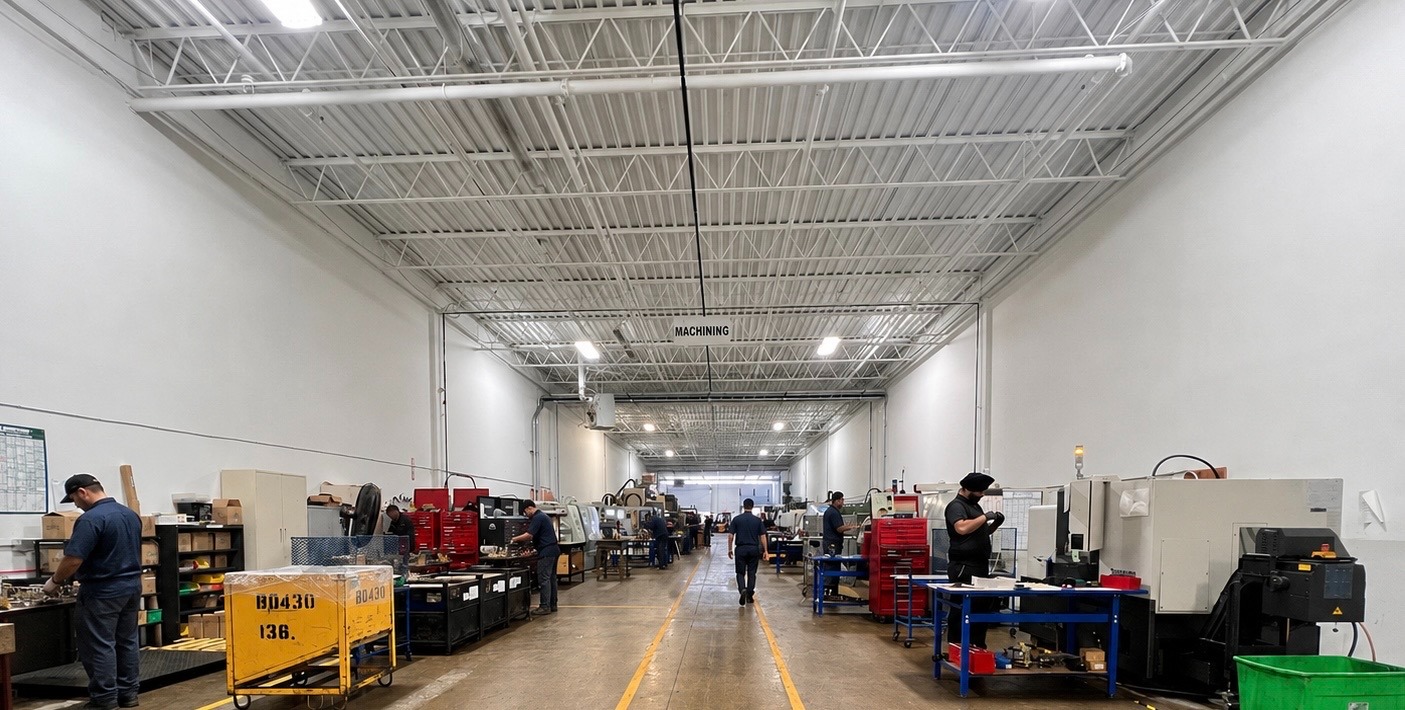
Vertical, Horizontal and 4th-Axis Milling
3- & 4-Axis CNC Milling
Plates, brackets, housings and fixture components machined on vertical and horizontal machining centres, with 4th-axis work for features around a part. Finished parts are checked on our two in-house CMMs.
- Method
- 3- and 4-axis milling · vertical and horizontal
- Tolerances
- Typical to ±0.001"; tighter or critical features reviewed from the drawing
- Inspection
- Two in-house CMMs, dedicated QC room
- Volumes
- Prototype through low- and medium-volume
- Facility
- 12,000 sq. ft., Brampton, Ontario
Where it fits
Parts and features suited to 3- and 4-axis milling
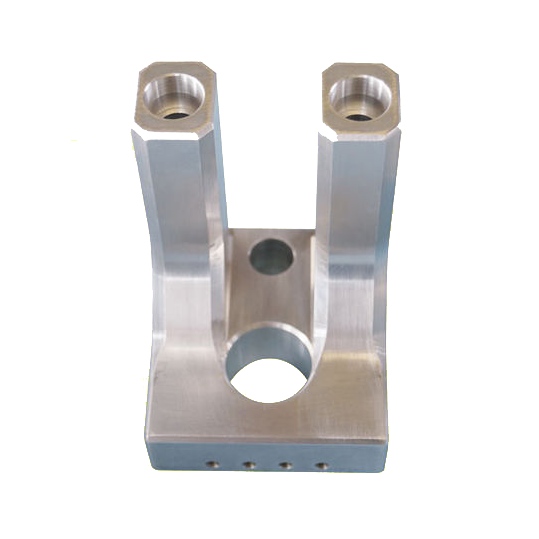
Prismatic parts machined mainly from the top, and parts with features around their sides or diameter.
- 01
Plates and base plates
Pockets, bores, tapped holes and dowel holes from one or two sides.
- 02
Brackets and mounts
Slots, counterbores and mounting features for machines and assemblies.
- 03
Fixture and jig components
Locators, clamp bases and nest plates where hole position matters.
- 04
Mold and tooling details
Plates, inserts and details for mold and tooling builds.
- 05
Housings with side features
4th-axis work to reach several sides of a part in fewer setups.
- 06
Features around a diameter
Cross-holes, flats and slots spaced around round or square stock.
Suitable applications include the parts above. Send the drawing for process-fit review.
Why it matters
The right setup for the part.
Not every part needs a trunnion. For many prismatic parts, 3-axis or 4-axis milling is the most direct route.
- 01
Direct route for prismatic parts
Parts machined mainly from the top face run on a straightforward vertical setup, without extra positioning moves.
ExampleA base plate with pockets, bores and tapped holes from one side.
- 02
4th-axis work on side features
Rotating the part on a 4th axis gives access to several sides, so side features can be cut with fewer re-clamps.
ExampleCross-holes spaced around a shaft or block.
- 03
Repeatable setups
Fixtures and proven programs support repeat orders and batch production.
ExampleA bracket reordered in batches, run on the same fixture each time.
Capability
Vertical, horizontal and multi-axis milling
3- and 4-axis work runs alongside horizontal and 5-axis milling and CNC turning with live tooling, all in one 12,000 sq. ft. Brampton facility.
- Parts move from the machine to our QC room for CMM inspection without leaving the building.
A plate may run vertical, a multi-sided housing horizontal or on a 4th axis, and a compound-angle part on 5-axis. We choose the route from your drawing.
- Number of sides
- Hole positions
- Material
- Batch size
Materials and quantities
What we mill
Tell us the material and quantity with your RFQ. If a grade or volume is not listed, ask.
Materials
- Aluminum
- Carbon and alloy steel
- Stainless steel
- Tool steel
- Brass
- Engineering plastics
Material certifications supplied when required and available. Send finishing and heat-treatment requirements with the drawing for review.
Quantities and specifications
- Volumes
- Prototype through low- and medium-volume production
- Tolerances
- Typical to ±0.001"; tighter or critical features reviewed from the drawing
- Inspection
- Two in-house CMMs, dedicated QC room
Inspection and quality control
Checked on in-house CMMs
Milled parts are inspected in our dedicated QC room on two in-house CMMs.
- Critical features and hole positions measured on the CMM when the drawing requires it.
- First-piece inspection before production continues, where applicable, and final QC release before shipment.
- CMM reports and inspection sheets supplied with shipments as applicable. Tell us the documents your drawing or PO requires.
Before you send an RFQ
What to include with your drawing and 3D model
Complete RFQs help us respond with a clearer, more accurate quote.
Drawing and model
- PDF drawing with revision and tolerances
- STEP or IGES 3D model
- Critical datums, hole positions and flatness callouts
- Material, finish and any heat treatment
Inspection requirements
- Critical-to-function characteristics
- Inspection documents required (for example CMM report, first article, material certificates)
- Cosmetic faces and surface finish requirements
Commercial details
- Quantity: prototype, batch size or annual volume
- Required delivery date
- Part number and revision
- Company name and business email
For repeat parts, tell us the expected annual volume and release quantities. That helps us plan fixturing and quote the right batch size.
Request a QuoteSend a drawing. Get a clear answer.
Attach your PDF drawing and tell us the quantity, material and the date you need parts. Complete RFQs help us respond with a clearer, more accurate quote.